






Crypto mining is the process of using high-powered computers to solve complex mathematical equations, validating transactions, and recording them on a public distributed ledger known as Blockchain. This mechanism allows networks like Bitcoin to remain secure and decentralized. Successful miners receive block rewards in the form of newly minted digital assets and transaction fees.
This article lays out best practices and commonly accepted accounting treatments for Digital Assets Mining Transactions under frameworks like GAAP and IFRS.
1. What Exactly Are You Accounting For?
A crypto mining company typically has the following key accounting components:
- Digital assets generated (mined BTC or other coins)
- Mining infrastructure (ASICs, data centers, electrical & cooling equipment)
- Operating costs (electricity, hosting, payroll)
- Revenue recognition for mined and sold coins
- Impairment
- Financing activities (debt, hosting contracts, equipment financing)
- Fair value measurement of Digital Assets holdings
Understanding these building blocks is essential in order to do the accounting and reporting correctly.
2. Accounting for Mined Bitcoin
2.1 How Mined Bitcoin Is Classified
Under both US GAAP and IFRS, Bitcoin is generally treated as an intangible asset with an indefinite life. It is not considered cash & cash equivalents, or a financial instrument. Some companies may choose to treat it like Inventory where it is held for sale in the ordinary course of business.
This means:
- It is initially recognized at the fair value at the time it is mined which becomes the “cost basis” for future calculations
- US GAAP (ASU 2023-08) & IFRS revaluation model allows for subsequent measurement at fair value at each reporting period
2.2 Revenue Recognition
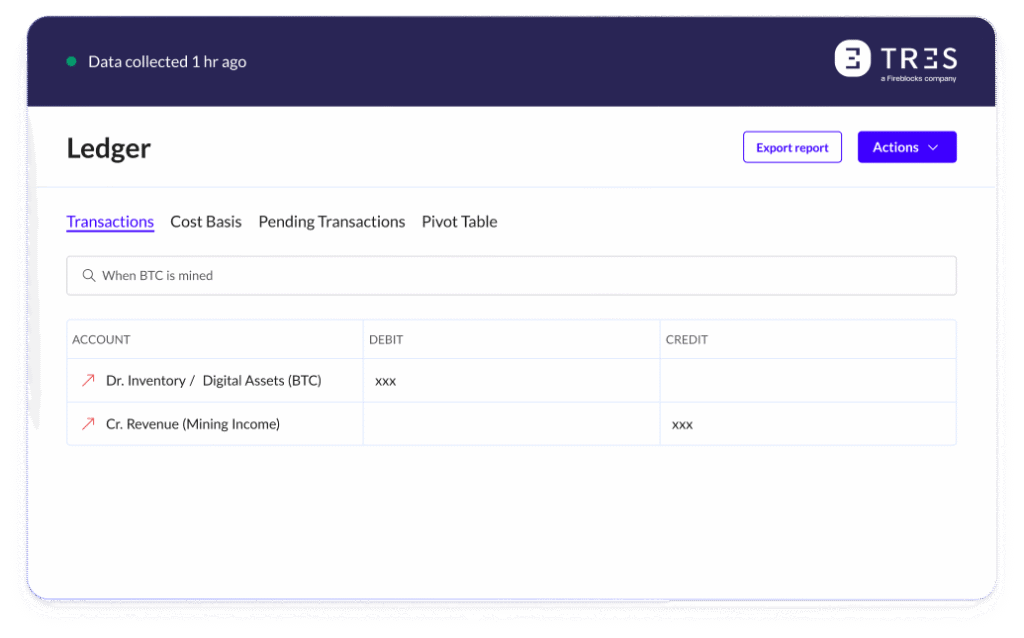
Mining rewards are recognized as revenue at the fair value when it becomes accrued
Journal entry when BTC is mined:
The value used is typically:
- Spot price from a compliant exchange
- Your internally documented pricing policy
3. Impairment & Sale of BTC Holdings
3.1 Impairment
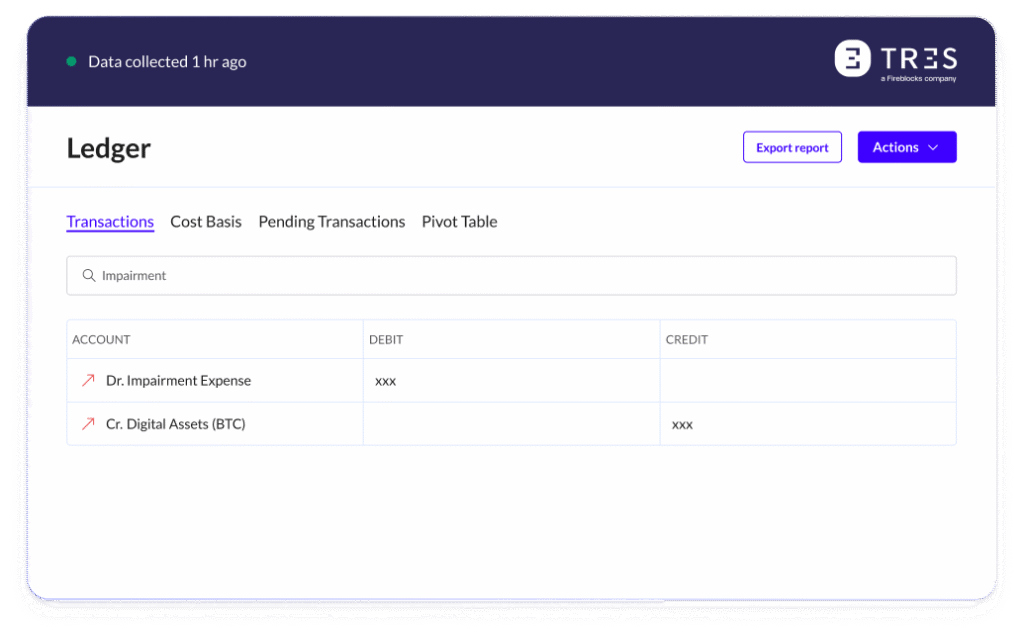
Under IFRS (IAS 38) digital assets are tested for impairment and if the price goes below the cost basis, Impairment loss is recognized in the Income statement which can be subsequently reversed if the price goes up
Journal entry for Impairment:
3.2 Sale of Bitcoin
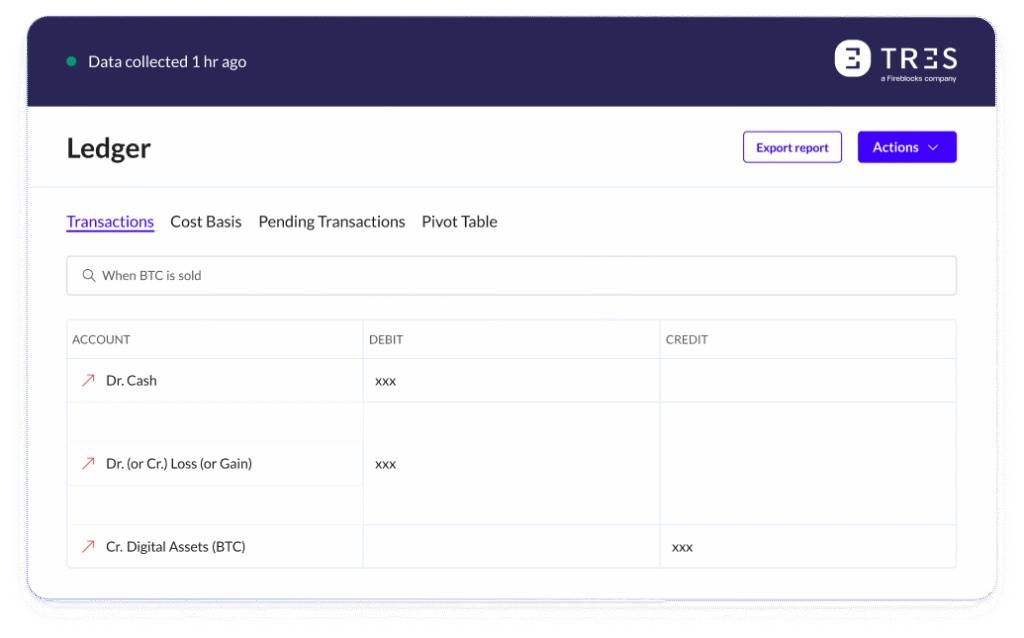
Sale/Disposition of Bitcoin is considered a taxable event and a Gain or Loss should be recognized taking into account the difference between the Sales Proceeds and the Carrying Value in the books of account.
Journal entry for Sale:
4. Accounting for Mining Pools
Most miners receive payouts through mining pools like Foundry USA, AntPool, ViaBTC, F2Pool etc. which collectively control a significant portion of the network’s hashrate. Proper accounting requires:
4.1 Recognizing Revenue
Record revenue when entitlement occurs, not when BTC gets deposited in your wallet
4.2 Pool Payment Methods
- FPPS (Full Pay Per Share)
- PPS/PPS+ (Pay Per Share)
- PPLNS (Pay Per Last N Shares)
Mining companies should maintain a system log mapping:
- Hashrate submitted
- Pool payout formula
- Daily entitlement values
This prevents revenue misstatement.
5. Internal Controls & Audit Practices
Crypto miners face several common audit issues such as:
- Missing pricing documentation
- Inaccurate impairment calculations
- Unreconciled wallet balances
- Incomplete pool payout logs
- Under-depreciated ASICs
Best practices include:
5.1 Reconciliation
Daily/Periodic reconciliation of:
- Wallets with mining pool statements and Internal accounting ledger
5.2 Pricing Policy
Use:
- A designated pricing index (Coinbase, Binance, CoinGecko etc.)
- Pricing frequency (Timestamp, end-of-day, daily average)
5.3 Separation of Duties
Different personnel on the team should handle these roles separately:
- Wallet access
- Accounting
- Treasury operations
6. Tax Considerations
Tax treatment varies by jurisdiction, but in most countries:
- Mining Income/ rewards is treated as ordinary income at the value on the mining date.
- BTC disposals create capital gains or losses.
- Electricity used for mining is deductible as an expense
- Cost of Mining Hardware can be capitalized and depreciated as per the company policy
7. Software & Tooling Stack for Mining Accounting
Automated integrations reduce errors, especially for:
- Impairment tracking
- Real-time Fair Market valuation
- Wallet reconciliation
- Revenue recognition
With financial compliance software like TRES Finance, Bitcoin miners are able to automate accounting, audits and reporting, allowing them to gain total accuracy, streamline reconciliation, and stay regulatory ready.
Conclusion
Bitcoin mining accounting blends traditional industrial accounting with modern digital asset standards, so it’s important to use a software that does this – like TRES Finance.
Mining companies that adopt the right policies today achieve:
- Cleaner financial statements
- Faster audits
- Better investor confidence
- Stronger treasury decision-making
- More accurate unit economics
Achieve complete financial compliance for your digital asset operations.
Interested in TRES?